Each bathroom in a house serves a different purpose. Powder rooms are used daily by guests and homeowners, while a guest bath may only be used a few weekends a year. A primary or family bath is likely used twice a day, every day, and then there’s the master bath. When homeowners consider a bathroom renovation, the first question is whether a given room needs a refresh or a full remodel. That answer drives the budget, the schedule, and how well the room holds up over time.
Deciding on a Small Renovation
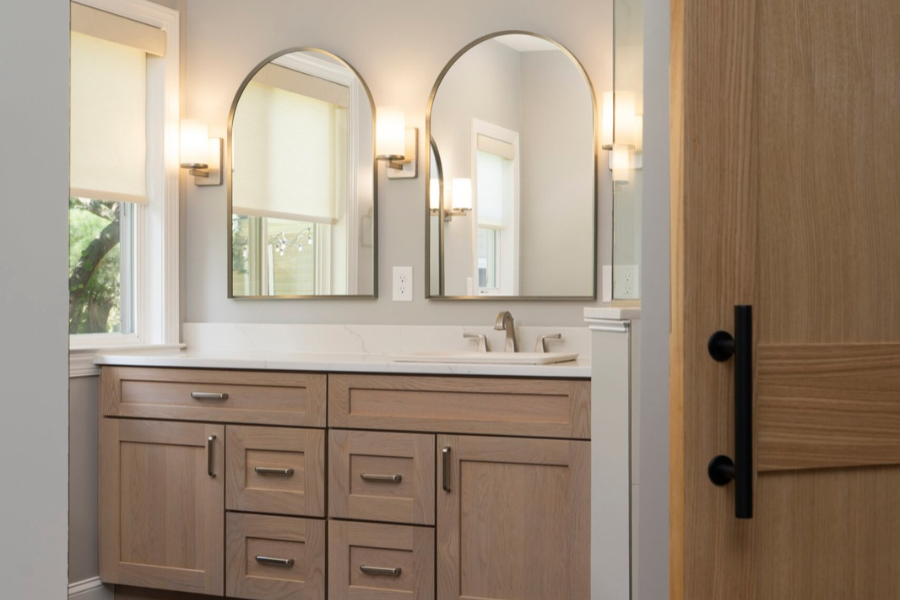
A refresh or minor renovation works within the current toilet, sink, and shower or bath. Those items stay in place, and little drywall work is needed. The project primarily focuses on fixtures and aesthetics – what you see and touch every day: the vanity and countertop, lighting, mirror, faucets, hardware, paint, and sometimes the floor. Many refreshes wrap up in days or a few weeks.
If the room is functional and structurally sound, then a refresh is the right call. If you like the tile and vanity, for example, a full remodel is not needed. If you like where everything sits and are simply tired of how it looks, a refresh gives you most of the visual change for a fraction of the disruption.
When It’sTime for a Full Remodel
A full remodel is a major renovation, oftentimes taking the room back to the studs. Plumbing can move, walls can shift, and everything from the subfloor to the ceiling is rebuilt. That makes room for a larger shower, a relocated toilet, radiant floor heat, better ventilation, and lighting planned from scratch. Construction for a primary bath often runs two to three months, with design, selections, and permitting ahead of that.
Look for these signs to identify if a full bathroom renovation is the right move for your home:
- Flooring that feels soft or spongy near the toilet or tub
- Loose tile, grout that keeps cracking, or a water stain on the ceiling below
- A layout that no longer works for your home, such as an unused tub or a vanity too small for two
- Plumbing or wiring that is original to an older home
- Mildew that returns no matter how often the room is cleaned, which usually points to poor ventilation
Bathroom projects may land in between the two options as well, when only a section of the bathroom design is significantly changed. A common middle path keeps the layout but replaces the shower and floor tile. That means opening part of the walls without relocating any plumbing, which controls cost while fixing what is worn out.
Powder Rooms Deserve To Shine
While considering a bathroom renovation, don’t overlook the powder room. It’s often the most used bathroom in a home. It’s a smaller room by design, making premium finishes more affordable. A few square feet of handmade tile, a stone remnant cut for the vanity top, or a statement light fixture can carry the whole space.
Most powder rooms don’t need a major remodel. The space typically does not allow for one. Impactful changes come from a new vanity or pedestal sink, a decorative mirror, better lighting, or a custom wall finish. If a larger powder room or a new room is part of your plans, you’ll need a complete remodel.
Planning a Primary Bath Remodel
Primary baths are larger spaces that require more planning. In a primary bathroom, the layout and plumbing decisions come before finishes. Decisions such as placing the shower controls near the entry so you stay dry when turning on the water matter, and setting proper shower floor slopes come first. Making plumbing and layout decisions early avoids costly changes later in the project.
A primary bath can also be a retreat, a place to unwind at the start or end of the day. Think about how you want the room to feel, not just how it works. Adding a freestanding soaking tub or oversized shower can turn a daily routine into a chance to unwind. Heated floors take the chill off cold winter mornings, especially in the Northeast. Layered lighting and dimmers let you switch from bright task light to a soft glow. Add plenty of storage to keep counters clear and bring a calmer feel to the space. Many of these features need wiring or plumbing, so plan for them along with the layout.
Order custom vanities, designer tile, and specialty bath fixtures in advance to avoid construction delays. Finalize these finishes before the project begins. Finishing touches, like a frameless shower glass, can only be measured after the tile is set, which adds time near the end.
Older homes often reveal surprises like original supply lines or a damaged subfloor once the walls are open, so it’s wise to hold 10 to 15 percent of the budget in reserve. In homes built before 1978, lead-safe practices apply, as the EPA explains in its Renovate Right pamphlet.
Frequently Asked Questions
Is a refresh worth doing if we plan to remodel later?
The answer depends on when you plan to remodel, and if the current bathroom is livable. If your remodel is several years away, simple updates like lighting, paint, and hardware can bridge the gap. Avoid putting money into a new vanity or floor that will be torn out.
Do we need a permit?
Cosmetic updates usually don’t need a permit, but your contractor can advise on local permitting guidelines. Moving plumbing, adding circuits, or changing walls usually does. Your contractor should handle permits and inspections.
Can we live at home during a remodel?
If there’s another usable bathroom available, then plan to stay in your home. It helps to plan where you will get ready each morning while the work is underway.
What makes the biggest difference in a powder room?
Guests notice three things first: the lighting, the mirror, and the wall finish. In a small room, each of these is a small investment that makes a big impact.
Schedule a Bathroom Renovation Consultation
The Werrlein Companies is a design-build firm with in-house design and service teams. Whether you want to update a powder room or rebuild a primary bath, one team manages the project from the first drawing through the final walkthrough. View our gallery of bathroom renovations and check out smart bathroom renovations for space-saving ideas.
We work with homeowners in Maryland, Connecticut, and Southern Rhode Island. Contact our Maryland office or Connecticut office, or schedule a consultation to discuss whether a refresh or a full remodel is right for your home.