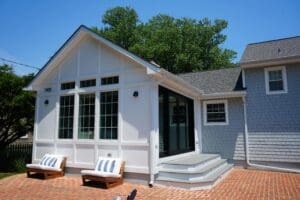
Adding living space that connects your home to the outdoors is one of the most popular projects among homeowners in Maryland and Connecticut. In most cases, the decision comes down to a screened porch or a sunroom addition. Each offers distinct advantages, and each can be customized in several ways. Before choosing, consider how often you plan to use the space, which seasons matter most to you, and how you typically entertain. The sections below outline the main options for each type of project.
Screened Porches
A screened porch provides open-air living while keeping out insects, leaves, and light rain. In Maryland, where humid summers stretch from May into September, this type of space tends to see heavy use. Similarly, along the Connecticut shoreline, a screened porch offers a comfortable setting for cool summer mornings and mild fall evenings. In addition, because a screened porch is not a fully conditioned living space, it is generally simpler to design than a sunroom.
Screens That Keep the Bugs Out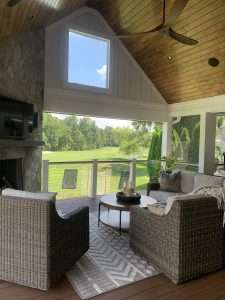
Standard mesh screens are the most common choice –they are affordable and easy to replace. There are options beyond standard mesh that work well for many homeowners:
- Heavier pet-resistant screening for homeowners with pets
- Solar screen fabric helps reduce glare and heat on south- and west-facing porches
For more flexibility, consider retractable screen systems. Retractable screens roll into a compact housing above each opening and can be operated by hand or with a motor. As a result, the porch can stay fully open on a pleasant afternoon and then close up at dusk, when mosquitoes become more active.
Heating, Cooling, and Fireplaces
During the summer, ceiling fans cool screened porches by keeping the air moving and also help discourage insects. When more warmth is needed, wall- or ceiling-mounted infrared heaters warm people and surfaces directly, making them well suited to open-air spaces. An outdoor-rated gas or wood-burning fireplace can also extend a screened porch’s seasonal use well into fall. For those who prefer wood, the EPA’s Burn Wise program offers guidance on cleaner, more efficient burning.
Flooring and Lighting Options
Screened porches are exposed to humidity and wind-driven rain. Flooring on screened porches should resist moisture. Composite decking, porcelain tile, and natural stone all perform well in these conditions.
Screened porches need outdoor-rated light fixtures. Standard indoor fixtures can corrode or short out when exposed to humidity and blowing rain.
- Choose a ceiling fan with an integrated light kit to handle airflow and lighting, while leaving room on the ceiling for heaters or recessed lights.
- For evening gatherings, string lights or wall-mounted lanterns add a lower level of light around seating areas.
Our electrical services team can install dedicated circuits for lighting, fans, and heaters while the porch is being built.
Winterizing a Screened Porch
With a few additions, a screened porch can remain useful through much of the cooler season:
- Removable vinyl or acrylic panels installed over the screens to block wind
- Infrared heaters positioned over seating and dining areas
- Heavy outdoor curtains that can be closed on cold or breezy nights
- Outdoor rugs to add warmth underfoot on tile or stone floors
Sunrooms
A sunroom is an enclosed room with large expanses of glass, designed to bring in as much natural light as possible. Unlike a screened porch, it protects against cold, wind, and heavy rain, so it can serve as a reading room, home office, or dining area depending on how it is built.
Three-Season vs. All-Season Sunrooms
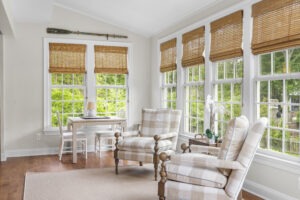 A three-season room is enclosed with windows, usually single-pane, and is not connected to the home’s heating and cooling system. As a result, it is most comfortable from early spring through late fall.
An all-season sunroom, on the other hand, is built to the same standards as the rest of the house, with an insulated foundation, walls, and roof, along with double- or triple-pane glass. Since it counts as habitable living space, it must meet the same building and energy codes as any home addition. For this reason, it typically requires more planning, more involved permitting, and a larger budget.
Glass and Natural Light
Natural light is the main reason homeowners choose a sunroom. Daylight makes a room feel larger and more inviting, and regular exposure is linked to improved mood and more consistent sleep, especially during winter’s shorter days.
The light orientation affects comfort. A south-facing sunroom collects useful warmth in winter, whereas a west-facing room can overheat on summer afternoons. Low-E glass coatings help control heat transfer and block much of the ultraviolet light that fades floors and furniture. ENERGY STAR’s window guide explains the ratings to compare when selecting glass.
Heating, Cooling, and Fireplaces
A sunroom needs reliable heating and cooling to stay comfortable year-round. Depending on the size of the space and your existing HVAC system, you may have enough capacity to condition the new space. A ductless mini-split is another option, with placement on the wall or ceiling mounted, providing separate temperature control without the need for additional ductwork. Our heating and cooling teams can help determine what makes the most sense for your home. A gas fireplace is also worth considering if you want extra warmth on cold days without much upkeep.
Flooring
Your sunroom flooring should hold up to everyday use while complementing the rest of your home. If your home has hardwood or tile, choosing a similar color or finish can help the addition feel connected to the existing layout. Luxury vinyl plank is worth considering for its durability and simple upkeep, while engineered hardwood brings the look of real wood into the space. Tile is another option, especially if you’re planning to add radiant heat beneath the floor. Werrlein’s flooring installation team can walk you through the options based on your home’s style and your budget.
Lighting
The lighting you choose in a sunroom extends its use after dark or even on cloudy days. Recessed lighting provides simple and understated illumination, while wall sconces and table lamps are the show-stoppers. Install dimmer switches to give you more control over the brightness, so your sunroom transitions well from bright brunches to casual evenings. Planning the lighting during construction also makes it easier to position fixtures where you need them most.
Decor and Textiles for Year-Round Use
In both spaces, seasonal changes to fabrics and accessories improve comfort as the weather shifts. For example, when fall arrives, homeowners can:
- Replace linen and cotton cushion covers with heavier fabrics and textured throws
- Swap lightweight jute rugs for thicker wool-blend or outdoor-rated rugs
- Move from lighter summer accent colors to deeper tones such as rust, navy, and forest green
- Store fans and summer planters, and bring out lanterns and seasonal greenery
Entertaining
A screened porch and a sunroom both work well for casual meals and gatherings. When located near the kitchen or grill, they’re even more convenient. If you cook outdoors often, our article on outdoor kitchens and living spaces offers ideas to extend your project outdoors. For game days, a sunroom makes television placement and glare control easier, although a screened porch can accommodate an outdoor-rated TV. Finally, during the holidays, an all-season sunroom provides valuable overflow space for a second dining table, a buffet, or extra seating.
Ready to Get Started?
In short, a screened porch suits households that value open-air living from spring through fall, while a sunroom addition is the better fit for those who want a bright, comfortable room in every season.
The Werrlein Companies is a full-service design-build firm. Our in-house team manages every phase, from design and permitting to carpentry, electrical, and HVAC. To see completed work, visit our outdoor living page.
We serve homeowners in Annapolis, Anne Arundel County, Prince George’s County, and Queen Anne’s County in Maryland, as well as Stonington, Mystic, New London County, Middlesex County, and Southern Rhode Island. Contact our Maryland office or Connecticut office to schedule a consultation.